Crazy Handwriting: A Fun Font for Real Projects
Let's be honest, the font you choose for a project does more than just display words. It sets a mood, tells a story, and creates an immediate emotional connection with your audience. In a world saturated with clean, corporate sans serif fonts and elegant serifs, there's a growing need for something more human, more approachable, and frankly, more fun. That’s where a character like Crazy Handwriting enters the scene. It’s not trying to be a serious editorial design workhorse; its job is to inject personality and a burst of energy into your work.
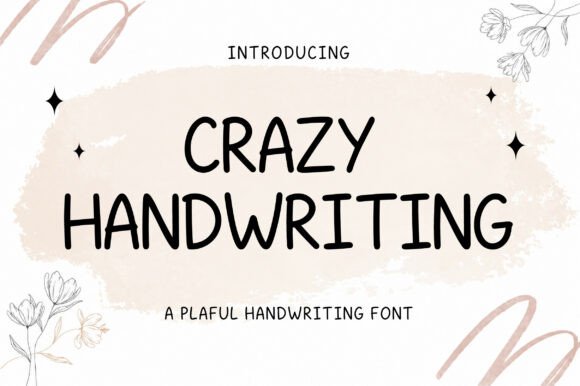
At its core, Crazy Handwriting is a handwritten font that feels authentically casual. The strokes have a natural, marker-like quality—tall, uneven, and full of character. This isn't a perfectly polished script font you'd find on a wedding invitation. Instead, it embraces its quirks, offering a friendly and playful vibe that feels like a note from a friend. The slightly irregular letterforms give it movement and life, making it an excellent creative font for projects that need to feel personal and energetic without sacrificing readability. It’s a premium font that understands its role: to be the life of the party, not the keynote speaker.
Where Does This Font Shine? Real-World Applications
The true test of any typeface is its versatility. Where does a font like Crazy Handwriting actually work? Its strength lies in projects where you want to break the ice with your audience. Think about branding for a local coffee shop, a children's boutique, or a personal blog. Using it in your logo design or on your website headers can immediately communicate a warm, welcoming, and down-to-earth brand identity. It tells customers, “We’re approachable and here for a good time.”
For marketers and content creators, this font is a secret weapon for social media graphics. A bold headline in Crazy Handwriting can stop the scroll, especially when promoting a sale, a new blog post, or a community event. It’s perfect for Instagram stories, Facebook ads, and Pinterest pins where you need to convey excitement quickly. Entrepreneurs and small business owners will find it invaluable for packaging design, especially for products aimed at a younger demographic or those in the lifestyle, food, or craft spaces. Imagine it on a label for artisanal jam or a sticker for a laptop.
Beyond the digital space, its applications in print are just as strong. It’s a fantastic choice for event posters, kids' party invitations, thank-you cards, and DIY crafts. For publishers and bloggers, it can be used sparingly for pull quotes or chapter titles in a more casual book layout, adding a touch of handwritten charm to the editorial design. The key is context. You wouldn’t use it for a legal contract or a formal corporate report, but for anything that needs a dose of personality, it’s a go-to.
Making It Work: Practical Guidance for Designers and Creators
Choosing a font is only half the battle; using it effectively is the other. The first consideration with a display font like Crazy Handwriting is readability. Its tall, uneven style is designed for impact, not for body copy. Use it for headlines, subheads, logos, or short calls-to-action. For longer paragraphs of text, always pair it with a highly legible sans serif font or a classic serif font. A clean, modern sans serif like Montserrat or Lato creates a beautiful contrast, letting the handwritten font pop while keeping the overall design grounded and professional.
This brings us to font pairing. A strong pairing elevates your entire design. Crazy Handwriting works well as the "accent" font in a font pairing. Think of it as the bold necklace that completes an outfit. Let it dominate a headline, then use a neutral, complementary font for your supporting text. This approach maintains a clear visual hierarchy—guiding the viewer's eye exactly where you want it—and ensures your message is both seen and understood.
Before you commit, always test the font in your specific design context. View it at different sizes to ensure its character remains clear. Check the spacing; you may need to adjust kerning or tracking for optimal balance. Also, take a moment to explore the full character set. Crazy Handwriting includes uppercase, lowercase, numbers, and special characters. Knowing what’s available helps you solve design problems on the fly. Finally, and crucially for any commercial project, verify the commercial font licensing. Ensure the license covers your intended use, whether it’s for a client's logo, merchandise for sale, or a mass-market publication. Doing this due diligence protects you and your client, allowing you to use this fantastic design asset with confidence.